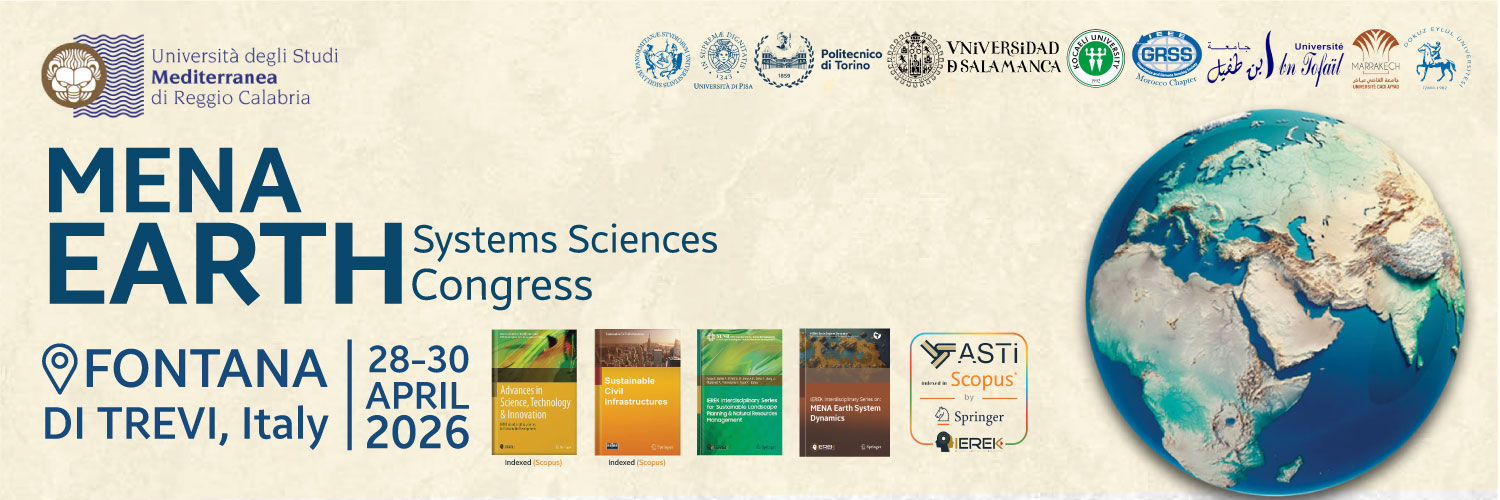
MENA Earth Systems Sciences Congress (MESC)
- 28th Apr - 30th Apr 2026
- ROMA EVENTI - FONTANA DI TREVI, Italy
- mesc@ierek-scholar.org
About the Conference
- Dr. Mourad Amer, President and CEO of IEREK & ASTI Series Editor by Springer.
- Prof. Zakaria Hamimi, Conference Chair, JAES Editor-in-Chief, and Professor at Benha University, Egypt.
- Prof. Anke M. Friedrich, JAES Editor-in-Chief and Chair of Geology at LMU Munich, Germany.
- Prof. Pakize Küreç Nehbit, Professor at Kocaeli University, Turkey.
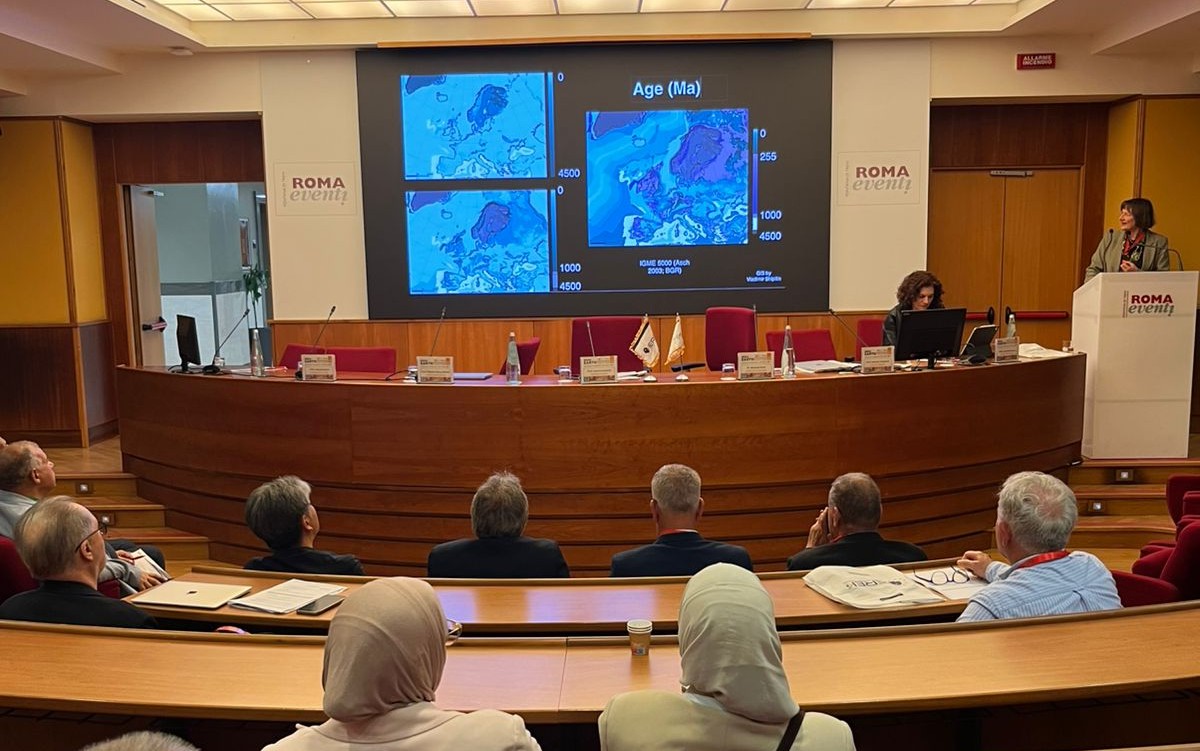
- Prof. Anke M. Friedrich (LMU Munich): Specialized in active tectonics and global stratigraphy, discussing the evolution of Earth's surface using remote sensing and AI.
- Prof. Nadhir Al-Ansari (Luleå University of Technology): Presented "Water Resources in Iraq: Perspectives and prognosis," focusing on AI applications in water resource management.
- Dr. Nivaldo Destro (Petrobras): Delivered a presentation titled "Earth, Global Tectonics and the Universe: An Integrated Approach," exploring the tectonic evolution of sedimentary basins.
- Darin Labrenz, P.Geo. (Laurentian Copper Corp): Presented "Geological and structural controls on the Egyptian gold deposits: case study from Wadi Khasab, South Eastern Desert."
- Prof. Kiichiro Kawamura (Yamaguchi University): Discussed "Dynamic backstop motion and seafloor deformation during megathrust earthquakes: Insights from the 2011 Tohoku-Oki Event."
- Prof. Jesús Galindo-Zaldívar (University of Granada): Explored crustal deformation and marine geology in the Betic-Rif Cordillera.
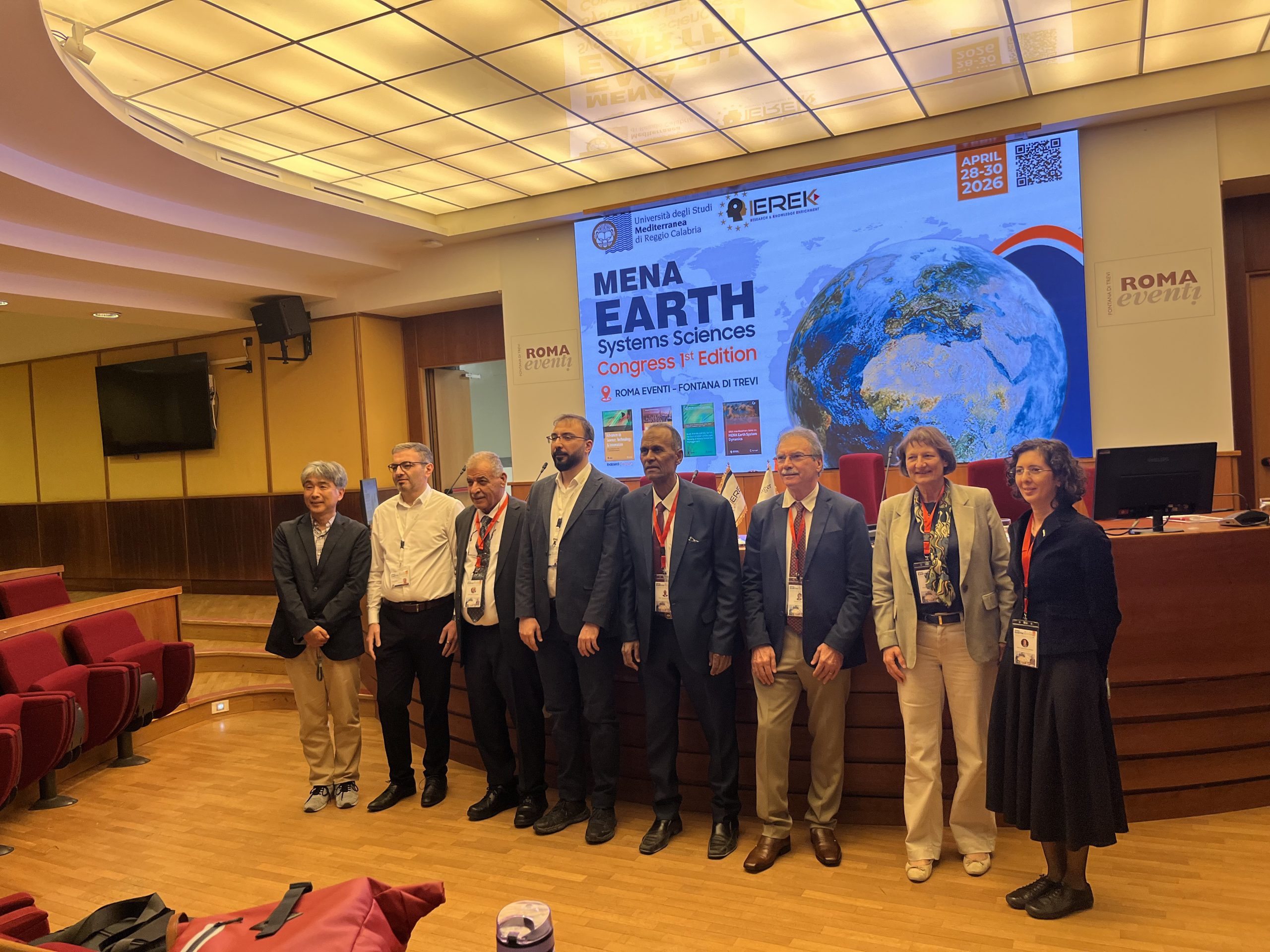
The inaugural MENA Earth Systems Sciences Congress (MESC) was held from April 28–30, 2026, at the ROMA EVENTI - FONTANA DI TREVI in Rome, Italy. Organized by IEREK in collaboration with a global network of partners including the International Union of Geological Sciences (IUGS), the Geological Society of Africa (GSAF), and the Arabian Geosciences Union (ArabGU), the congress established a vital forum for addressing the region’s unique environmental challenges and advancing innovation in Earth Sciences.
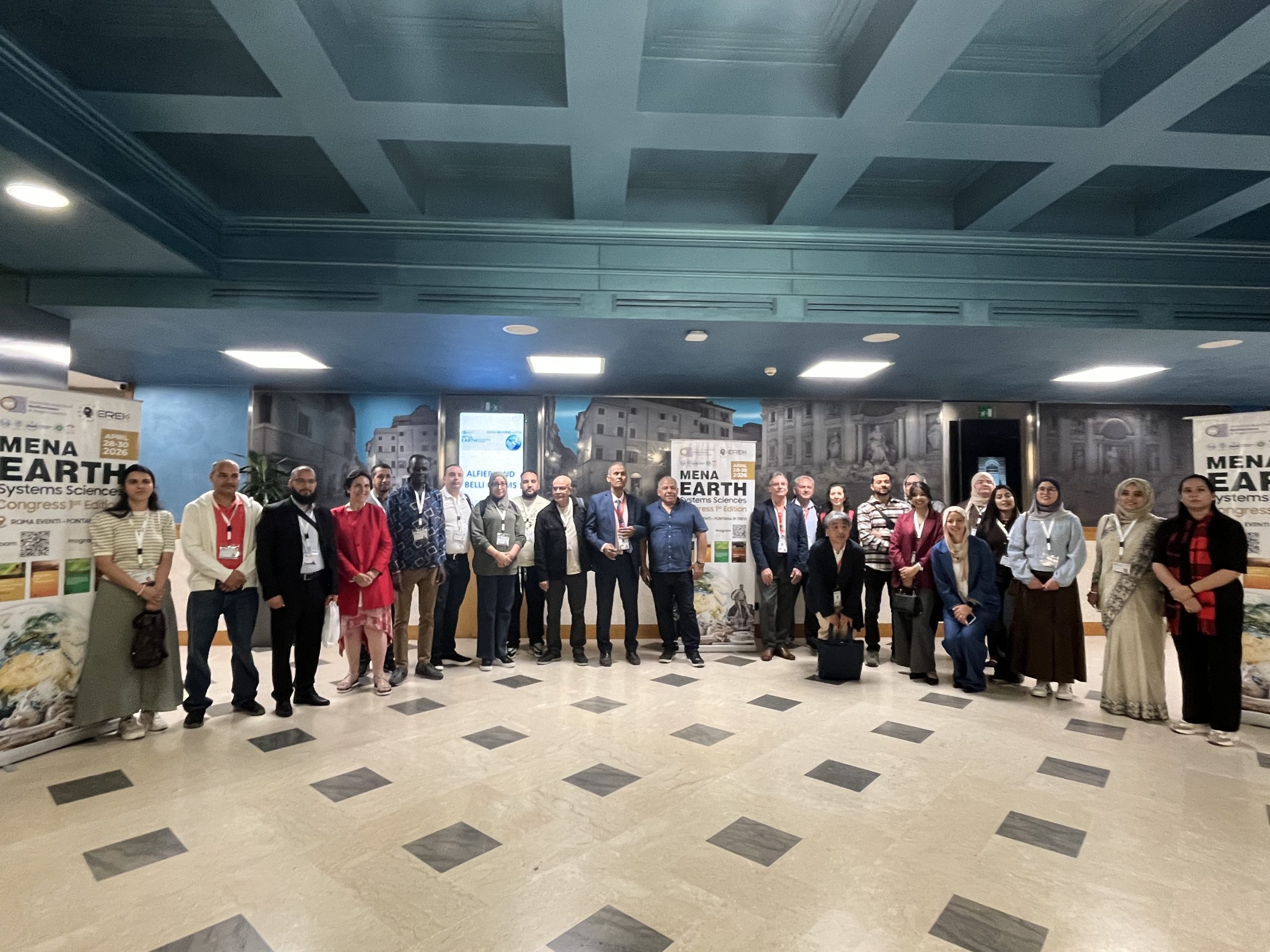
Day 1: April 28, 2026
The conference commenced with a registration session and welcoming speeches by distinguished leaders, including:
A brief presentation followed, introducing IEREK as a key collaborator, outlining its activities and contributions to academic and professional development, particularly its movement toward hybrid conference hosting to ensure safety and progress.
Keynote Sessions
The opening plenary sessions featured inspiring keynote speeches by world-renowned experts:
Parallel Sessions
Following the keynote addresses, the first day featured Session 1: From Field Observations to Data-Driven Models in Environmental Geosciences, moderated by Prof. Kiichiro Kawamura. Authors presented research on remote sensing for hydrological validation, water mineralization in aquifer systems, and GeoAI-based flood network analysis.
Day 2: April 29, 2026
The second day focused on specialized parallel tracks, allowing for deep dives into specific geoscientific disciplines.
Parallel Sessions
Four parallel sessions explored diverse and critical topics:
Session 2: Climate and Environmental Dynamics: Impacts, Sustainability, and Geoscience Solutions
Moderated by Darin Labrenz and Prof. Kiichiro Kawamura. Topics included green building design, soil erosion risk prioritization, and sustainable natural fiber laminates.
Session 3: The Solid Earth & Planetary Evolution
Moderated by Prof. Anke M. Friedrich and Dr. Nivaldo Destro. Discussions centered on Neptunian dykes, orogenic gold deposits in the Egyptian Nubian Shield, and 3D fracture propagation in coal rock.
Session 4: Geospatial Technologies & Data Science
Moderated by Prof. Jesús Galindo-Zaldívar. Highlights included urban growth dynamics in Nairobi, satellite-based ore prospecting, and relocating earthquake epicenters using InSAR.
Session 5: Water Resources, Ocean Systems & Climate Dynamics
Moderated by Prof. Nadhir Al-Ansari. Research covered geogenic trace elements in groundwater, probabilistic approaches to groundwater flow, and the water-food production nexus.
Day 3: April 30, 2026
Online Sessions
The third day of the conference features two parallel scientific sessions focusing on Digital Earth technologies, geospatial innovation, climate change, environmental sustainability, and resilient societies. Discussions bring together researchers and experts addressing earth system challenges through advanced data science, remote sensing, and interdisciplinary environmental approaches.
Parallel Sessions
Session 6: Digital Earth, Geospatial Technologies, and Data Science in Earth System Analysis Moderated by: Prof. Rashad Sawires, Khalifa University, UAE
Session 7: Climate Change, Environmental Sustainability, and Resilient Societies Moderated by: Nivaldo Destro, Senior Geologist, Petrobras, Brazil
Featured Conferences
View all
Environmental Design, Material Science, and Engineering Technologies (EDMSET) - 4th Edition
- 20th Apr - 22nd Apr 2027
- Abu Dhabi University, Dubai, UAE

Conservation of Architectural Heritage (CAH) - 11th Edition
- 14th Sep - 16th Sep 2027
- Ravello, Italy
.jpg)
Urban Planning & Architectural Design for Sustainable Development (UPADSD) – 11th Edition
- 20th Oct - 22nd Oct 2026
- University of Florence, Italy
.jpeg)
AI & The Human Sphere (AI-Sphere)
- 30th May - 31st May 2027
- Online Conference
Ask Us Anything!
If you have any question regarding our services, please fill out the form below and we will get back to you as soon as possible.
Partners